NEED A SATURDAY APPOINTMENT?
We are Open on Saturdays. (Consultations & surgery offered)
Call us today to book your appointment!
We are Open on Saturdays. (Consultations & surgery offered)
Call us today to book your appointment!
 Mon - Fri: 8:00AM - 5:00PM
— Lipedema Blog
If you are reading this, you have likely spent years—perhaps even decades—trying to solve a puzzle
that didn't seem to have all the pieces. You’ve followed the diets, you’ve committed to the gym,
and yet, while your upper body might change, your legs and arms remain stubbornly the same.
In my practice in Montreal, I meet women every week who describe the same experience: a body that feels like it’s being held hostage by its own tissue. This isn't a lack of discipline; it is a complex, often misunderstood medical condition known as Lipedema.
The most common question I encounter during consultations is: "Is surgery the right path for me, or should I continue with conservative management?" Deciding to move forward with a surgical intervention is a significant step. By understanding the nature of the condition, the three stages of its progression, and the advanced techniques we use to treat it, you can make a choice that aligns with your long-term health and quality of life.
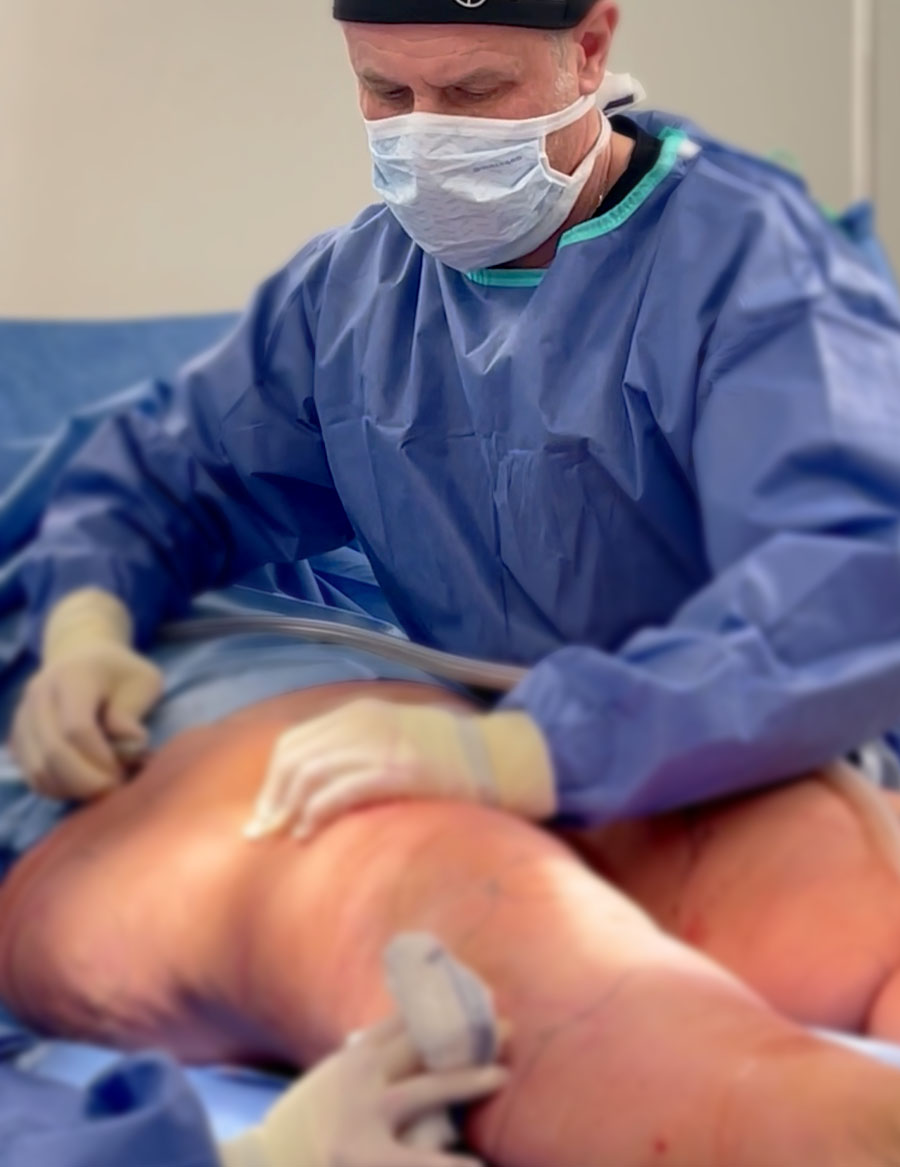
Lipedema is a chronic, progressive adipose (fat) tissue disorder. Unlike standard weight gain, Lipedema fat is metabolically distinct. It involves a symmetrical accumulation of fat, typically in the legs, hips, and sometimes the arms, while the hands and feet usually remain unaffected. This often creates a characteristic "cuff" or "bracelet" effect at the ankles or wrists.
Beyond the aesthetic changes, Lipedema presents a variety of physical symptoms. The affected tissue is often hypersensitive to pressure and can feel "heavy" or "wooden." Patients frequently report that their limbs feel congested, leading to significant daily discomfort that does not improve with rest or elevation.
One of the most heartbreaking aspects of Lipedema is its resistance to traditional weight loss. Because Lipedema fat is fibrotic (scar-like) and often accompanied by inflammation, the body does not "burn" it the same way it burns normal subcutaneous fat. You could run a marathon every day and eat a perfectly clean diet, and the Lipedema tissue would likely remain.
While a healthy lifestyle can improve overall wellness, the fat associated with lipedema is uniquely resistant to caloric restriction and physical activity.
Deciding on surgery often depends on which "stage" you are currently in. This is essential for determining the right surgical timing. While I always recommend a clinical examination to confirm your stage, here is a general breakdown:

When we talk about "surgery" for Lipedema, we aren't talking about standard cosmetic liposuction. Traditional liposuction can be aggressive and, if not performed with specialized knowledge, can actually damage the lymphatic vessels, making the condition worse.
Drawing on my training in Germany—a country that has pioneered Lipedema research—I utilize a "lymph-sparing" protocol. This means our priority is to remove the diseased fat while protecting the vital channels that drain fluid from your limbs.
In our Montreal clinic, we don't just use one tool; we tailor the technology to your specific tissue type:
When considering any procedure, it is important to look at the holistic impact it will have on your life. For Lipedema patients, the benefits often extend far beyond the physical changes seen in the mirror.
Unlike traditional cosmetic liposuction, the surgical protocols I utilize are specifically designed to be "lymph-sparing." By carefully removing the Lipedema fat that is "crushing" the lymphatic channels, we can actually improve the body's ability to drain fluid. This often leads to a significant reduction in the swelling and "tight" sensations that characterize the end of a long day.
Living with a "mismatched" body can take a heavy toll on one's mental health. Many of my patients describe a sense of "body dysmorphia" because their legs don't seem to belong to the rest of them. The benefit of surgery isn't just about "looking better"—it’s about the mental freedom that comes from finally having a body that reflects the hard work you put into your health.
It is a frustrating cycle: Lipedema makes it difficult to exercise, and a lack of exercise can lead to further health complications. After recovering from surgery, most patients find they can engage in activities they previously avoided—like hiking, biking, or even just walking through the park—without the heavy, weighted-down sensation that previously held them back.
Choosing surgery is a major decision. Here are the key indicators that it might be the right time to transition from conservative management to a surgical solution:
Lipedema surgery, particularly liposuction, can be effective in reducing the excess fat associated with the condition and improving symptoms. However, it is essential to make an informed decision in consultation with a healthcare professional who can assess your individual case and provide personalized recommendations based on your unique circumstances.
Keep in mind that treatment options and recommendations can vary from person to person, so it’s crucial to have a thorough evaluation by a specialist to determine the best approach for your situation.
If conservative approaches fall short and you're ready for transformative relief, WAL under Dr. Coeugniet's expertise could be your path forward. As Canada's leading specialist, he ensures safe, evidence-based care tailored to you.


While the underlying genetic predisposition for Lipedema remains, the surgical removal of diseased fat cells is considered a long-term "reset." Because these specific cells are physically removed, they do not grow back. However, maintaining a stable weight and following a healthy lifestyle is essential to prevent any remaining non-Lipedema fat cells from expanding.
For patient safety and optimal results, we typically perform Lipedema surgery in stages. Depending on the volume of tissue and the number of areas affected (e.g., lower legs, thighs, arms), most patients require 2 to 4 sessions spaced several weeks or months apart. This staged approach allows the body to heal and minimizes the stress on the lymphatic system.
Lipedema is a fat distribution disorder that is symmetrical and typically spares the feet and hands. Lymphedema is a failure of the lymphatic drainage system, often resulting in asymmetrical swelling that includes the feet and hands. If left untreated, advanced Stage 3 Lipedema can lead to "Lipo-Lymphedema," where both conditions are present.
While you will notice a change in your silhouette immediately, significant swelling is normal following the procedure. The true "lightness" and reduction in discomfort are typically felt within 4 to 6 weeks, with the final aesthetic results and skin tightening taking 6 to 12 months to fully settle.
If you are struggling with the symptoms of Lipedema and want to know more about a safe surgical plan, contact us today.
Discover the life-changing relief you've been searching for—right in the heart of Montreal! At Lipœdème Montréal, you're guided by Dr. Edouard Coeugniet, MSc, Canada's exclusive lipedema specialist and a Professor of plastic surgery at Montreal University. with over 25 years of unmatched expertise at CHUM (Centre hospitalier de l'Université de Montréal) He's transforming lives with lymphatic-sparing Water-Jet Assisted Liposuction (WAL), the undisputed gold standard that stops lipedema in its tracks, slashes chronic discomfort, and restores effortless mobility with remarkably short recovery times. Backed by elite collaborations with Europe's top pioneers from Germany and Switzerland. Dr. Coeugniet crafts personalized treatment plans that deliver proven, lasting results—empowering you to embrace freedom and confidence like never before.
BACK TO BLOGWe’ve created the most advanced techniques to relieve discomfort & help those suffering from Lipedema get their life back!
 info@lipoedememontreal.ca